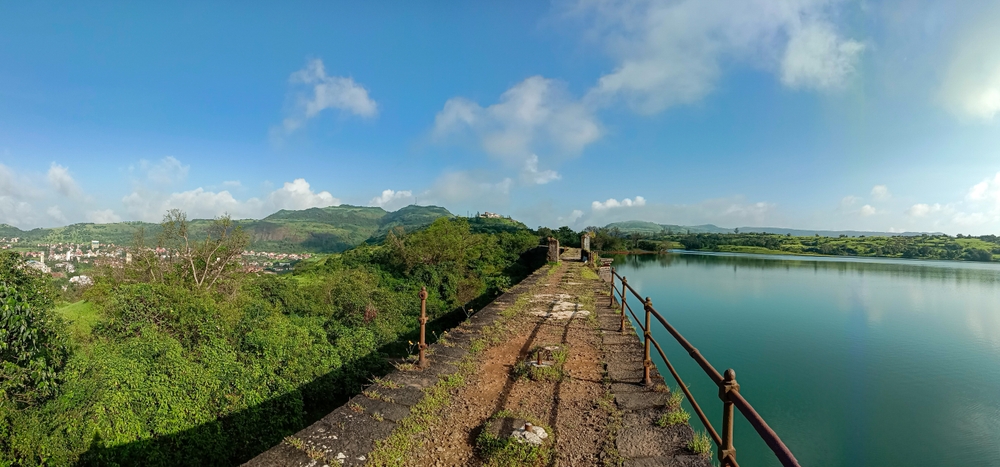
tungarli dam lonavala
- TravelLonavala has a checklist problem. Tiger Point. Lion's Point. Bhushi Dam. Kune Falls. The standard circuit that every Mumbai and Pune day-tripper completes in sequence, photographs, and returns home having seen the same things as the last hundred visitors who made the same drive up the expressway.
Tungarli Dam Lonavala sits off this checklist. Not because it's obscure, the lake is visible from parts of the Lonavala ridge and the approach road is straightforward. Because the tourist infrastructure hasn't assembled itself around it the way it has around the busier viewpoints. The result is a water body that rewards the visitor who makes the detour, the specific quiet, the reflections, the early morning mist over the lake surface that no photograph adequately captures and no Instagram post fully justifies.
Here's what the detour is actually worth.
What Tungarli Dam Actually Is
The Tungarli Dam was built to supply drinking water to Lonavala town. Practical infrastructure first, the scenic dimension arrived as a consequence rather than a design brief. The reservoir it created sits at an elevation that the surrounding Sahyadri landscape frames on three sides, the hills rising from the water edges in a way that makes the lake feel contained and specific rather than generic.
The lake is walkable. The path around the reservoir, approximately 3 kilometres of gentle terrain, is the activity that the Lonavala day-tripper whose legs still work should build a morning around. The early hours are specific. The mist that the Sahyadri produces in monsoon and post-monsoon sits on the water surface before the sun burns it off. The bird activity at the lake margins, kingfishers, herons, the migratory species that the reservoir attracts in winter, is the dimension that the viewpoint circuit never offers.
The water level changes significantly with season. Tungarli Dam Lonavala in the monsoon, July through September, carries the lake at near capacity, the green of the surrounding hills at its most vivid, the waterfall activity on the adjacent slopes running continuously. October and November bring the post-monsoon clarity, full lake, clean water, the Sahyadri light doing what Sahyadri light does in the cooler months.
The Walk and What It Produces
The approach to Tungarli Dam Lonavala from the town is approximately 1.5 kilometres from the main market area, a walk that most visitors undertake without a vehicle and that takes fifteen minutes at an unhurried pace.
The dam structure itself is worth spending time on. The view from the dam wall across the reservoir, the hills, the water, the occasional rowing boat, is the specific visual that the viewpoints above the valley don't provide because they're looking across the landscape rather than into it.
The surrounding area has a small garden and sitting areas that the municipal infrastructure maintains with varying enthusiasm depending on the season and the political moment. The monsoon brings the greenery to a level that makes even undistinguished landscaping look intentional. The winter brings the bird activity.
Photography here works differently from the Tiger Point and Lion's Point circuit. The viewpoints above Lonavala are dramatic, the valley dropping away, the clouds below the ridge in monsoon, the scale that the Sahyadri elevation produces. Tungarli Dam Lonavala is intimate rather than dramatic. The reflections, the close water, the birds working the margins, a different kind of photograph and a different kind of morning.
What's Around: The Day Built Around the Lake
- Tungarli Dam Lonavala works best as the morning anchor of a Lonavala day rather than the standalone visit.
- Bhushi Dam is 6 kilometres away, the cascade that the tourist circuit built its Lonavala reputation around.
- Valvan Dam is nearby, the second reservoir that the town's water infrastructure created and that the leisure visitor discovers somewhat accidentally.
- Ryewood Park is 1.3 kilometres from the dam, the botanical garden-adjacent park that provides the post-walk green space without requiring a separate vehicle trip.
- Kune Falls, 2.3 kilometres from the dam, is the waterfall visit that monsoon Lonavala specifically enables. Three tiered drops in the Sahyadri, the total fall significant enough to justify the approach.
- Tiger's Leap viewpoint 11 kilometres for the dramatic end of the morning.
- Lion's Point 12 kilometres in the same direction.
- The old Mumbai-Pune Highway runs adjacent to most of Lonavala's attraction belt, the road that connects the dam, the falls, the viewpoints, and the market without requiring expressway access between each stop.
Hotel Grand Visava: The Lonavala Base
Hotel Grand Visava is a well-located, practical base for exploring Lonavala beyond the usual circuit. It offers multiple air-conditioned rooms across Premium, Premium Twin, Superior, and Suite categories, all equipped with essential in-room amenities for a comfortable stay. Guests have access to a swimming pool, fitness centre, game zone, and billiards, along with two dining options, Garam Masala for multi-cuisine fare and Revanta for pure vegetarian meals. A bar and lounge, parking, and a business centre add convenience. Tungarli Dam is 3 km away, with Bhushi Dam (6 km) and Kune Falls (2.3 km) nearby.
The Morning Worth Making
Tungarli Dam Lonavala is the part of the hill station that the standard circuit skips and the experienced Lonavala visitor returns to. The lake, the walk, the monsoon mist, the birds at the water margin, none of it requires a plan more complex than arriving before 8am and staying until the sun has fully arrived.
The viewpoints are dramatic. The dam is quiet. Both belong in the same Lonavala day, the dam in the morning when the light is specific and the crowd hasn't arrived, the viewpoints in the afternoon when the cloud builds and the valley does what it does.
Tungarli Dam Lonavala is the detour that earns itself.
Leave a Reply
Your email address will not be published.